
Ask a serious lifter for what they check on a label these days, and “clinically studied” doesn’t cut it alone anymore. Third-party testing, sure. Banned substance screening? Definitely. But there’s a newer question working its way into that checklist: where did this ingredient actually come from, and can the brand prove it?
That question matters more than it looks on the surface. For an adaptogen taken daily, over months, by people training hard enough to care what’s circulating in their bloodstream, sourcing and safety aren’t separate conversations. They’re in the same conversation. A supply chain nobody can trace back to a specific farm is also a supply chain nobody can fully vouch for on purity. Ashwagandha is a useful case study, because it’s dealing with this problem right now. The clearest example of what real accountability looks like is the KSM-66 story: end-to-end ownership of the supply chain, from cultivation to the finished extract, where quality is demonstrated through direct oversight rather than supplier assurances.
For thousands of years, Ayurvedic practice used only the ashwagandha root for internal consumption. The leaf had a role too, but it stayed topical. That distinction wasn’t arbitrary. Ashwagandha leaf carries much higher concentrations of Withaferin A, a compound tied to liver toxicity concerns that regulators have cited directly in recent rulemaking [1,2].
It’s also roughly 100 times cheaper to source than the root [1]. That price gap is exactly why cheaper “ashwagandha extracts” quietly blend in leaf material, and why a category built on trust started attracting the kind of shortcuts that erode it.
Regulators caught up in 2026. In April, India’s Ministry of Ayush issued a directive mandating root-only material in Ayush formulations and requiring manufacturers to declare the plant part used on the label [1]. The Food Safety and Standards Authority of India followed with its own advisory reinforcing that only root and root extracts are permitted in food and nutraceutical products, with enforcement action against noncompliance [2]. Poland and Hungary already restrict food supplements to root-only ashwagandha. The direction of travel is clear, and out of 427 registered clinical trials on ashwagandha, 426 are on root or root-based material.
“Traceable” gets used loosely in supplement marketing, so it’s worth being specific about what it takes into practice. Most raw material in botanical industry changes hands several times before it reaches a formulator: a farmer sells to a broker, the broker sells to an extractor, the extractor sells to a distributor. Every handoff is a place where adulteration can take place, and nobody downstream has an easy way to check.
Real traceability means owning enough of that chain to close those gaps. That’s a farm-to-finished-extract model, and it’s the difference between a brand that can point to a specific field and one that can only point to a certificate of analysis.
It starts with ownership. KSM-66’s extract comes from 1,600 acres of certified organic farmland in Rajasthan [3]. Workers harvest by hand, pulling the plants and stripping off the aerial parts before the roots are washed, sun-dried, and sorted. That keeps the leaf and root separate at the exact point where control is easiest to lose. The dried leaves and stems go back to the fields as compost for the next crop, replenishing the soil.
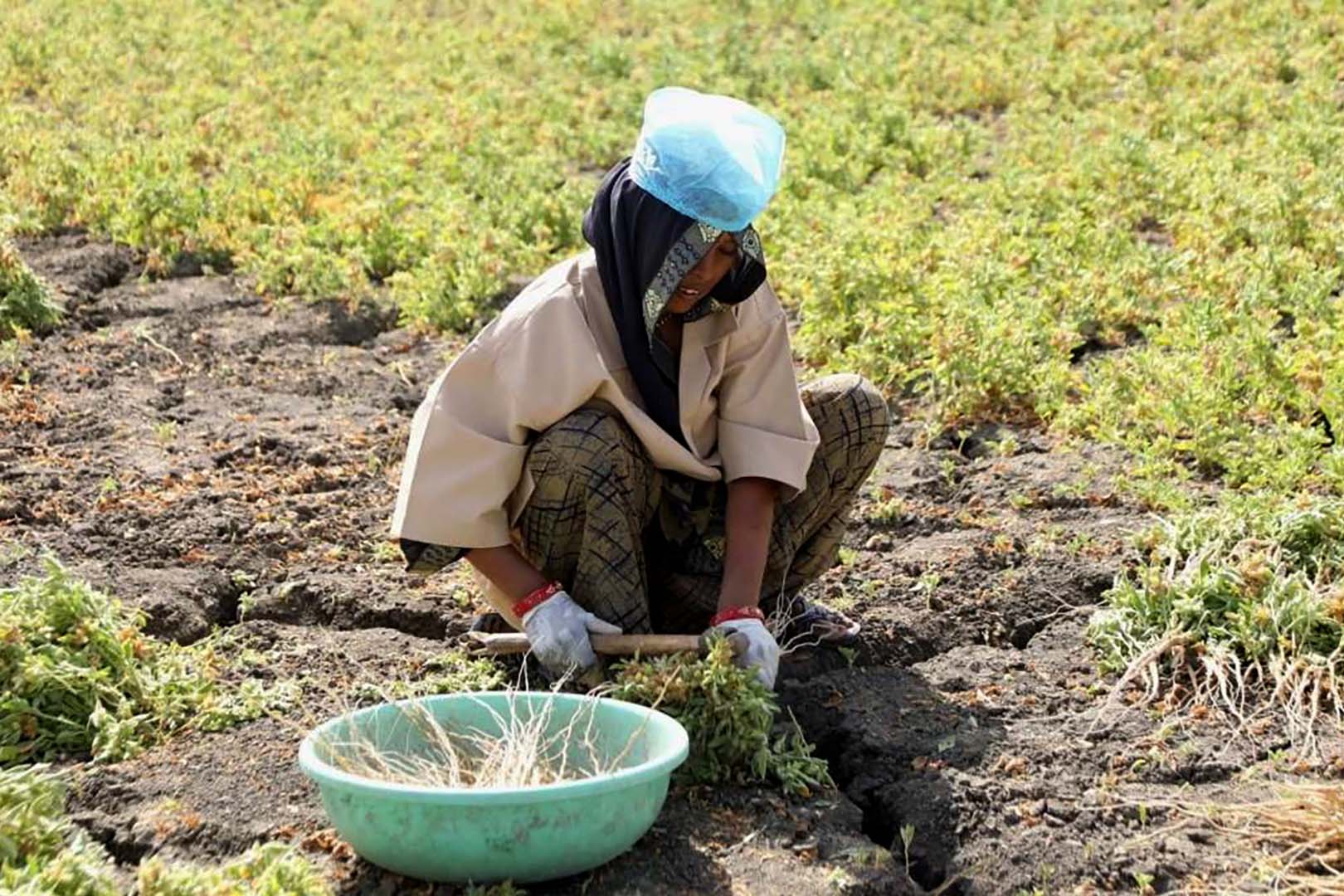
From there, the roots run through an aqueous extraction process built on green-chemistry principles, with no alcohol or solvents. Every batch traces back to that same farm and that same process. Nothing about the ingredient rides on someone else’s paperwork. Buyers don’t have to take that on trust: scanning a QR code opens Ixoreal’s TagOne system, which surfaces the farm and farmer records, certifications, photos and video, and lot-level quality reports for the exact batch in hand.
That control carries straight into the finished extract. Because the company owns both the harvest and the extraction, it can account for exactly what goes into the product: root, and only root, with no adulteration at any handoff. A brand buying from brokers can’t say the same with confidence, because it never controls the step where leaf gets substituted in.
If you compete in a tested sport, or you just want to keep banned substances out of your supplements, a “clean” label counts little on its own. What matters is independent verification: proof that someone outside the company puts the ingredient through analytical testing rather than taking the manufacturer’s word for it. KSM-66 holds two widely regarded certifications. BSCG Certified Drug Free runs the ingredient through Olympic-caliber lab testing, checking it against the World Anti-Doping Agency (WADA) Prohibited List and screening for other drugs and contaminants that could pose a doping or health risk. Informed Ingredient, run by the independent lab LGC, works one step earlier, on the raw material itself, confirming it has been tested for banned substances before a manufacturer builds it into a finished product.
Testing is only half of it, though. A manufacturer also has to trace and account for every production lot, and that gets far easier when one company runs cultivation, harvest, extraction, and manufacturing instead of buying through a string of middlemen. A fully traceable chain lowers the odds of contamination, substitution, and handling errors, and it makes every certification more credible. For an athlete or a careful buyer, that’s the assurance that matters: the ingredient in the finished supplement is the same one that passed the testing in the first place.
As regulatory bodies in India, the EU, and elsewhere start treating plant-part accuracy and sourcing transparency as enforceable requirements rather than nice-to-haves, the brands that already have that infrastructure in place aren’t scrambling to catch up. For formulators picking an ashwagandha source, and for lifters reading labels more carefully than they used to, traceability isn’t a separate checkbox from safety or performance. It’s the thing that makes both of those claims verifiable instead of just stated.
KSM-66 built years ago what every other ashwagandha supplier is now racing to prove. It owns the entire chain, seed to finish extract, and remains the only ashwagandha ingredient that can say so. The 2026 crackdown on leaf adulteration has the rest of the category scrambling for paperwork, while KSM-66 just points to the soil: root, and only root, traceable to the exact field and the exact lot.
A claim is easy to make; a guarantee must hold up batch after batch. KSM-66 didn’t chase the new benchmark for traceability. It set it, and every batch proves the point: the world’s best ashwagandha is also the most traceable one.